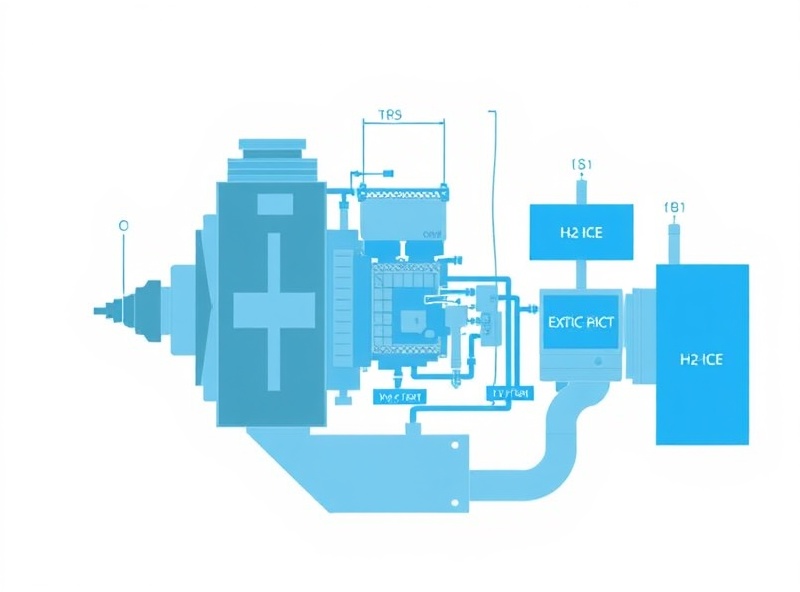
One of the earliest criticisms of hydrogen internal combustion engines was their tendency toward pre-ignition and backfire—uncontrolled combustion that damaged engines and limited performance. Early hydrogen prototypes, particularly those relying on port fuel injection, struggled with these issues. This technical barrier created skepticism about hydrogen combustion’s viability.
The Pre-Ignition Problem
In early hydrogen engine designs, hydrogen’s extremely wide flammability range (4-75% concentration in air) meant that the fuel could ignite spontaneously under compression, before the spark plug fired. Port injection systems sprayed hydrogen into the intake manifold, mixing it with air long before it reached the cylinder—creating an ideal environment for unwanted ignition.
The result: rough running, power loss, and engine damage.
Direct Injection: The Game Changer
Modern H2-ICE systems use direct injection, delivering hydrogen directly into the combustion chamber at precisely controlled timing—just milliseconds before ignition. This approach provides several critical advantages:
-
Precise Timing Control: Hydrogen is introduced exactly when and where needed, eliminating pre-mixing opportunities.
-
Reduced Residence Time: Fuel spends minimal time in the combustion chamber before ignition, preventing spontaneous ignition.
-
Lean Burn Capability: Direct injection enables lean-burn operation (high air-to-fuel ratios), improving efficiency while reducing nitrogen oxide (NOx) emissions.
-
Thermal Cooling: The rapid evaporation of directly injected hydrogen absorbs heat, cooling the combustion chamber and further suppressing pre-ignition.
Real-World Performance
Several manufacturers have now demonstrated reliable H2-ICE systems using direct injection. Test vehicles have logged thousands of operating hours with performance and durability equivalent to diesel engines. Acceleration, torque curves, and reliability metrics all meet or exceed original diesel specifications.
The breakthrough is not in exotic new materials or radical designs—it’s in applying proven direct injection technology (already standard in modern diesels) to hydrogen fuel.
Implications for Fleet Conversion
This technological maturity means that H2-ICE conversion is no longer experimental. The underlying technology is proven, tested, and ready for commercial deployment at scale. Fleet operators can confidently invest in conversion knowing they’re adopting a mature technology, not betting on a prototype.
The age of hydrogen engine skepticism is over. Modern direct injection has delivered on hydrogen’s promise.